The repetition of tasks is the biggest issue when working with artificial intelligent. The AI assistant may produce an amazing answer in a single moment but then lose crucial context in the following interaction. To ensure that the conversation is kept moving, developers will often provide the identical project documents or files often.
As AI is integrated into everyday software, the effectiveness of this approach will decrease. Intelligent systems must be able to hold relevant information, retrieve it instantly and recognize how information changes as time passes. This is why memory has become one of the key components of a modern AI architecture.
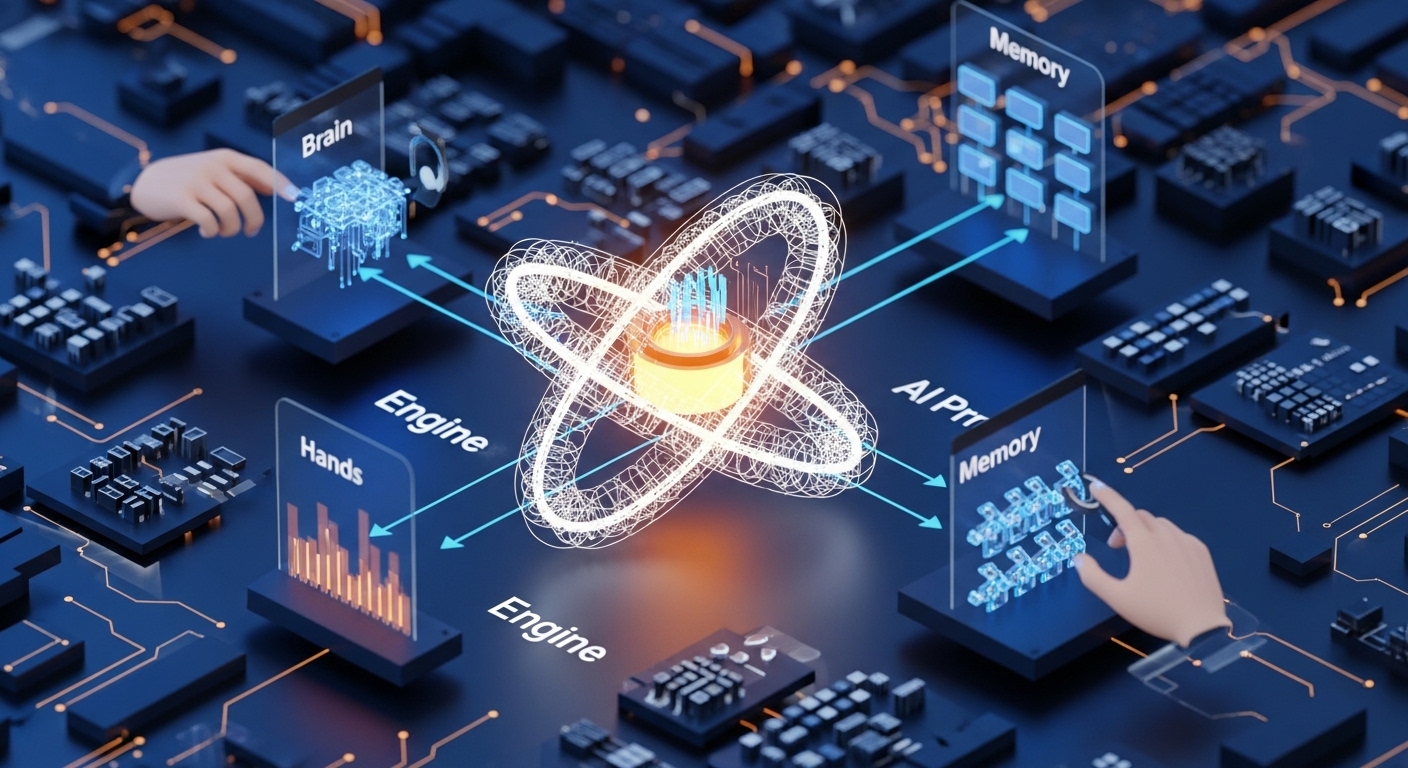
Memory transforms AI from reactive to intelligent
An AI system that remembers prior work performs differently in comparison to one that has to start new each time. Persistent Memory lets applications identify patterns and to understand the ongoing work. They are also able to provide answers that are based on the historical context instead of individual prompts.
Telys has been created to solve this problem. It’s not a cloud service but an embedded AI agent memory that is able to store and retrieve information directly within the application. This design gives developers a reliable way to maintain information while also reducing the need for computational and repetitive processing. The result is that AI experiences feel more natural as the software will remember everything that is important.
Keep data local to improve both speed as well as privacy
AI models are no longer evaluated based on their ability to produce text. The speed of retrieval, system’s responsiveness, and the security level are equally important to organizations who employ AI in production.
Using on-device memory for AI agents allows applications to retrieve relevant information without depending on constant communication with external servers. The memory is kept in the local area, which means requests are processed faster and companies have better control over sensitive information. This design is particularly useful for teams developing internal software, enterprise-level applications, or applications that are sensitive to privacy.
Memory behind the scenes is an enormous benefit for developers.
In order to build intelligent software, you shouldn’t need to manage an intricate infrastructure just to store the information. Developers are increasingly looking for tools that can be easily built into workflows already in place, without requiring additional expense.
Local MCP memory servers make this possible, providing compatible AI environments to access persistent memory directly within the local ecosystem. AI assistants do not need to transmit data over remote APIs. They can obtain the precise data they require directly from the memory that is already linked to the application. This method is streamlined and reduces the amount of latency and provides a more seamless experience for developers working on large-scale projects with constantly changing codebases and documentation.
AI’s future will be built upon context
Artificial intelligence has evolved from conversations that were simple to systems capable of analyzing, planning and performing tasks on their own. These systems require a solid memory to store data across all interactions.
Telys is a standout as an advanced AI memory engine, providing persistent local retrieval specifically designed to support intelligent applications that require speed, reliability, and privacy. Combined with on-device memory for AI agents, and a powerful local MCP memory server Telys allows developers to create software that is able to remember past tasks, instantly retrieves the knowledge and is constantly improving over time.
As AI gets more integrated into products and business operations The ability to recall accurately may become just as important as being able to think. Telys helps AI developers to create AI applications that are faster more efficient, smarter and more effective by providing a long-lasting understanding to intelligent systems rather than short-term conversations.