A restaurant owner opens the monthly P&L then looks over sales, then skips to the bottom line and then closes the report.
Does this sound familiar?
The report might be 100% exact, but if those are the only two figures to be reviewed the majority of its value is being left unreviewed.
Bookkeeping for restaurants that is efficient shouldn’t leave proprietors more dependent on accountants. They should become more comfortable with their own numbers. You don’t need to know every accounting rule and do a lot of work in the evenings completing invoices. You need to understand the way profit has fluctuated, what’s happened to food and labor costs and what questions should be addressed next week.
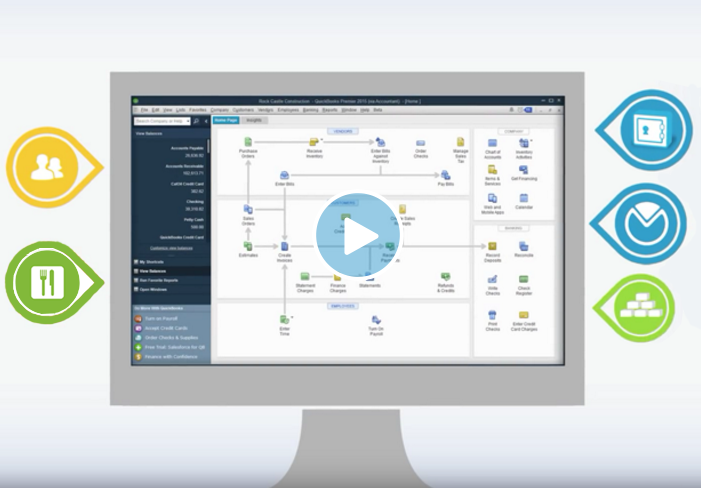
Bookkeeping Chef is a software that helps automate bookkeeping so users can focus on other things while getting better financial reports.
You must begin looking at Weekly Numbers and Not just Month-End
A monthly P&L matters, but restaurants do not operate on a monthly basis. Managers plan the labor for the week. The chef is ordering food today. Vendors change prices now.
The weekly reports on Bookkeeping Chef’s prime-cost report are published alongside the financial statements for the month.
Prime cost is the sum of two important areas which can be quickly moved in a food service establishment: cost of goods sold, and the cost of labor. The data provided by the Bookkeeping Chef reveals that the prime cost typically accounts for 60 percent of the sales in restaurants.
Imagine sales haven’t drastically changed, but prime cost rises. This percentage doesn’t provide an answer. This gives the owner an opportunity to conduct some research.
Did the hourly wage rise? Did overtime happen? The cost of food increased? A vendor’s invoice appeared to be unusually big? Did sales mix changes?
This is far more beneficial than finding the same problem several weeks later.
Automate the repetitive Work
DIY bookkeeping isn’t limited to manually transposing POS figures into spreadsheets.
Automating the restaurant’s bookkeeping process will eliminate repetitive data movement. It integrates various systems such as POS as well as QuickBooks payroll vendor platforms, and inventory management.
The goal is not automation for its own sake.
The aim is to reduce manually entering data and to ensure that financial records are kept up-to date so that managers are able to spend more time looking over the data instead of trying to assemble it.
It is a totally different bookkeeping process for restaurants. Technology takes care of the mechanical aspects and the proprietor remains involved with the financial aspects.
P&L Questions: Find out How to Ask More Effective Questions
Stop looking at your P&L as like an accounting test.
Start by analyzing the sales. Examine the costs that are required to generate those sales. Compare the effectiveness of drinks and food. Check the cost of labor. Look at labor.
Also, you should compare the time periods.
If the sales rise but the profits do not, there is a difference between them. What did happen when prices for food were rising? If the percentage of labor changed by a significant amount, you can compare sales and staffing activity. Find any data that seems unusual, instead of just thinking that the restaurant experienced a poor week.
Bookkeeping Chef sends monthly P&Ls within five working days. This allows owners to review recent performance without waiting for financial reports that typically arrive months after the conclusion of the operating period.
For owners searching bookkeeping restaurant solutions, speed is useful but understanding is the bigger objective.
DIY doesn’t have to mean Doing Everything Yourself
There’s a compromise between outsourcing the entire financial functions to someone else and being your own bookkeeper full-time.
You are able to be a business owner and not be required to complete the entire accounting process manually.
It could be as simple as automatizing systems to ensure information flow, reviewing an annual P&L and a weekly report on primary expenses or asking questions when an unexpected event occurs.
Specialized restaurant bookkeeping can help in this way by keeping the books in order and assisting the proprietor to understand what they mean.
However, this does not mean the bookkeeper is capable of performing all bookkeeping functions.
Business owners who can be able to sit down and discuss intelligently about their business and the P&L will have more success.
The Goal Is Financial Independence Not More Reports
Restaurants already generate huge quantities of data. A different dashboard might not be helpful.
When an operator is able to take a look at their weekly prime cost report and see that something has changed, they can then open up their P&L to find out what is in need of further investigation.
Bookkeeping Chef’s approach to bookkeeping integrates restaurant accounting automation with weekly reports, monthly P&Ls and the provision of financial support for specific restaurants to make this process possible.
Automate repetitive tasks. Review prime cost every week. Learn the language used in your P&L.
You don’t need to be an accountant.
Owners who know the financial aspects of their own establishments are able to make better decisions.