A disused wastewater liftstation can be located in a municipality. Pumps are about to expire their usefulness, the controls need to be modernized and the access hatch must be replaced. Even though the concrete wetwell is structurally sound, it’s time to be updated.
Should the station be completely removed? Not necessarily. The more useful question is whether the existing infrastructure is able to support a modern pumping system with no compromise in security, maintenance access or capacity in the future.
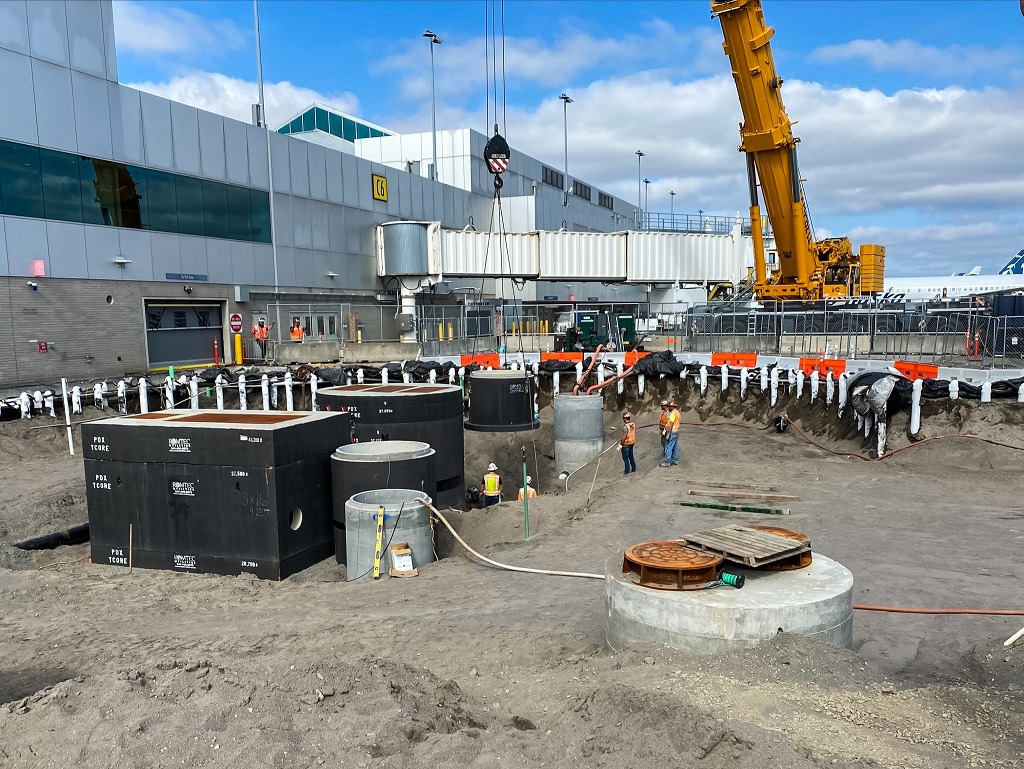
Image credit: romtecutilities.com
A carefully engineered pump station retrofit can preserve valuable infrastructure while replacing components that no longer meet operational requirements.
Begin with the Structure that nobody Would Like to Replace
Wet wells are typically the most costly and disruptive part to replace, since they are constructed underground and attached to existing pipes, and essential to the collection of wastewater.
If the concrete structure is functional, it is possible to minimize excavation and construction work.
But, any deterioration that occurs around the access hatch could complicate the decision. Romtec Utilities identifies wet well hatch replacement as a common retrofit requirement. It may be more durable to replace the top slab rather than attach a new hatch on deteriorated concrete. This approach can improve access and increase the usefulness of the structure without having to rebuild the entire wet well.
A new pump improves the engineering
Imagine a place that has increased significantly since the lift station’s initial installation. It’s possible that current pumps aren’t able to handle increased flows of wastewater.
The improvement of a pumping system could include higher-horsepower equipment, but this isn’t possible without considering the surrounding system. To make the pumps more powerful there is a possibility that you will need make adjustments to the discharge elbows or pipe. There is also the possibility of having to change electrical controls and valves.
Engineers must also evaluate the requirements of the hydraulic system, including the flow and head total dynamic. A larger pump installed without studying these factors can lead to problems in operation instead of resolving the issues. The planning of future capacity at the initial design can make later expansion considerably easier.
Keep the water moving during construction
Retrofitting a wastewater pump station can present the challenge of a completely new one. Unlike other equipment replacement projects, the station will require continued operation throughout construction.
Wastewater continues arriving even while contractors are working. In the case of a project the temporary bypass pumping might be necessary to keep services while existing equipment is taken away and new components are installed.
Romtec Utilities embraced this difficult task at the Federal Law Enforcement Training Center, Brunswick, Georgia.
The project involved replacing two aging wastewater lift stations, while operating the facility. Site-specific engineering packages, replacement systems for packaged equipment, and bypass pumping strategies were used to adapt to the station’s footprints as well as operational needs. This is a good example of how the order of construction should be carefully considered before installation.
If you decide to replace, it is the best Choice
Not all stations are suitable for rehabilitation. Sewer lift stations could need to be replaced in the event of a badly damaged wet well, or have a low capacity for structural strength.
It is important to take into consideration structural requirements along with equipment compatibility, accessibility to construction, as in the long-term requirements for operation. Romtec Utilities starts retrofitting and replacing projects by identifying the components that are to be kept as well as those that require to be replaced.
The company also develops engineering solutions specific to the site, preliminary designs as well as budget estimations. Prefabricated parts are also helpful to facilitate installation and reduce some on-site requirements.
The Project is not Completion until the Pumps Have Set to Start
Modern lift stations should be operated as a system in one. Before returning the lift station to service, testing the startup and commissioning tests will ensure that the pumps, controls as well as other equipment are performing according to established specifications.
Maintenance and operation manuals, as well as training for operators, are essential. Maintenance workers must be aware of the latest equipment, operating procedures and documents before they can assume responsibility for the station.
An effective retrofit will preserve the infrastructure that is still valuable and addresses the shortcomings that led to modernization being necessary.
For municipal facilities and facility owners, that means looking beyond the immediate repair. The most successful plan is one that integrates new equipment into existing structures, keeps up with essential services throughout construction, and also prepares the pumping system for years to come of operation.