It’s not unusual for wounds, blisters, or sores to heal on their own. Most of the time, with some washing and attention the body does incredible job of healing themselves. When a wound does not heal within about four to six weeks, or becomes more red, swollen and leaking fluid, or exhibits an unpleasant odor, it is a sign that there’s something more serious happening. Sometimes, a sore that starts small can become a non-healing leg or foot ulcer, and if it’s not treated the wounds can result in serious complications, even the need for amputations in extreme instances.
So if you’ve been waiting and watching a sore that will not heal, it might be time to stop waiting and seek assistance.
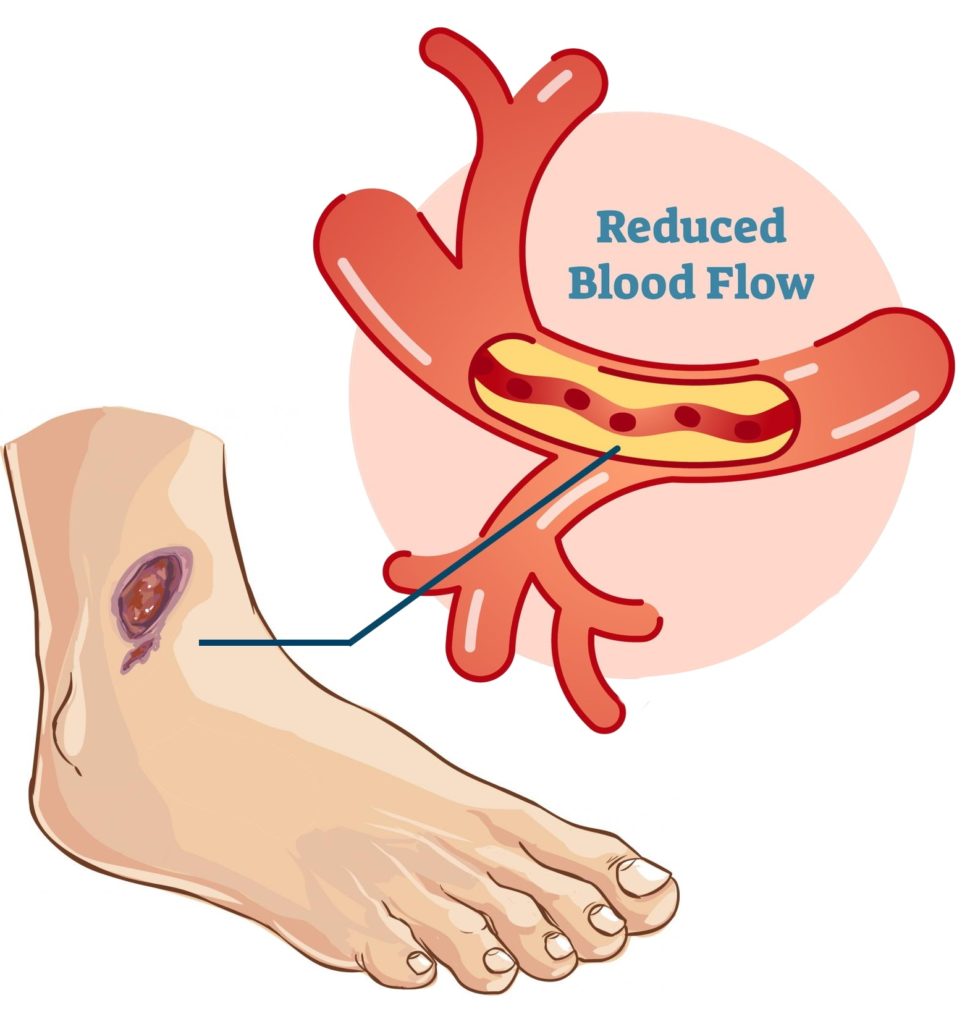
Some Wounds Do Not Heal
Understanding why a cut won’t heal can help both you and your physician determine the most effective treatment.
You’re at an increased chance of developing leg and foot wounds that do not heal properly if you suffer from diabetes. High blood glucose levels can affect nerves and cause it so that you do not feel the injury. They also reduce blood flow.
Another big cause is poor circulation, often linked to venous or arterial ulcers. If your arteries or veins aren’t functioning properly, your blood isn’t delivering enough nutrients and oxygen to improve your skin.
You may also develop bedsores (pressure ulcers) if you have mobility problems. These are another type of wounds that can be extremely resistant if not treated correctly.
Alongside age, additional factors such as certain medications (such as blood thinners) as well as autoimmunity-related conditions or poor nutrition, can delay healing. It’s possible that a combination of factors can make a wound persist.
How long does healing last and what happens if it isn’t?
You may be wondering about the “normal” healing process is. In reality, the amount of time required to heal depends on your condition and type cut. Small cuts or blisters may heal in a few weeks. A more serious foot ulcer or leg wounds that do not appear to be healing can take as long as 12 weeks.
Don’t put off seeking professional help if you don’t see improvement after 4 to 6 weeks. This is the best time to seek the help of an expert. The longer an open wound is left and is left untreated, the more dangerous it could turn into.
The right help is what You Deserve
It’s not “bad luck” that your ailment doesn’t heal. The body requires assistance. The positive side? There are treatments and experts that could make a huge difference. At our clinic, we specialize in treating non-healing foot ulcers and leg wounds, leg wound won’t heal working alongside your other healthcare providers to create a personalized plan that gives your body the best chance to heal and helps prevent amputations.
There are solutions for high-end wound dressings, blood flow repair and even hyperbaric therapy. We’ll help you each step of the way as no one has to face wounds that aren’t healed by itself.
Final Thoughts
Being afflicted with a wound that won’t heal isn’t just an issue with your body. It affects the entire life. There is the possibility of healing. Do not hesitate to seek assistance if you’re fed up with dealing with an ulcer on your leg that does not heal or is causing a constant sore or a wound that’s not healing. The earlier you ask to get help, the faster the wound you’ve been struggling with will heal and allow you to resume the life you deserve.